Dissertation
Parallel Worlds Under One Roof: Knowledge, Professional Boundaries, and Traditional Chinese Medicine
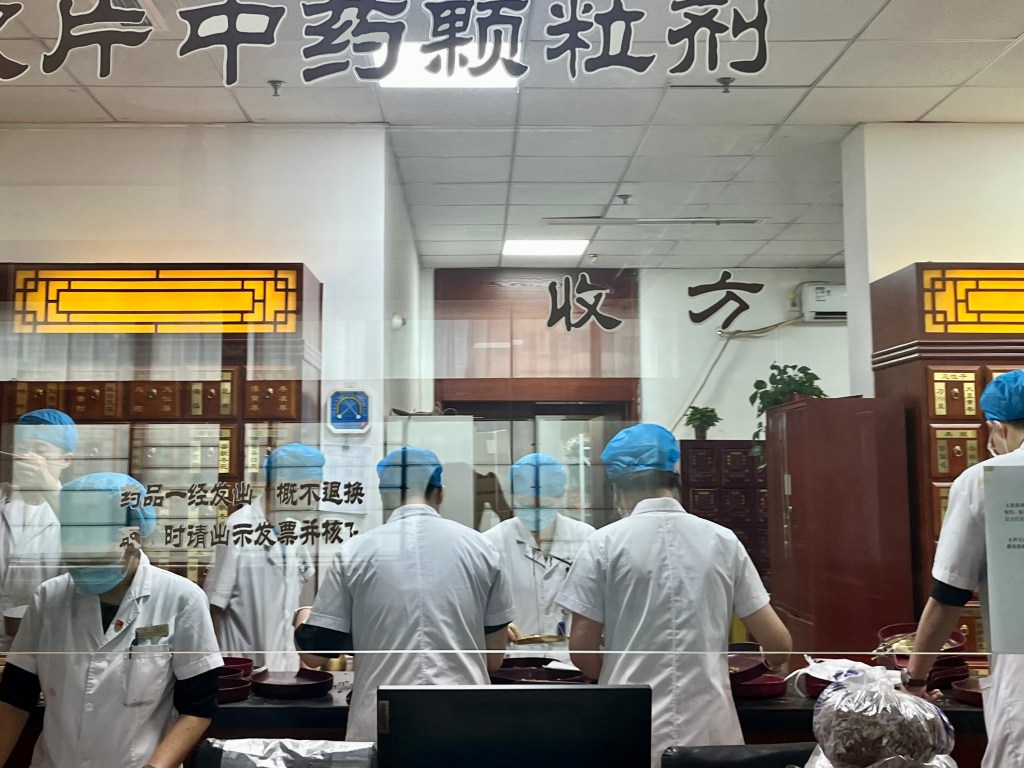
My dissertation asks how professional authority and legitimacy are organized when one form of medicine is institutionally included yet epistemically subordinated. It focuses on the contemporary revival of Traditional Chinese Medicine (TCM) in China, examining how TCM and Western medicine (WM) coexist within a state-regulated healthcare system shaped by policy mandates, insurance incentives, and cultural politics.
Working Paper
“Iron Shoulders” in the Cage: The State, the Market, and Professionals’ Moral Dilemmas
How do professionals make sense of moral dilemmas that arise at the intersection of the state and the market? Drawing on 52 in-depth interviews with Chinese journalists across core state and market-oriented media, this study examines how they interpret and cope with ethical tensions arising from state intervention, market forces, and intrinsic professional values. The analysis shows how journalists reconcile these tensions through moral repertoires drawn from Communist ethics of “serving the people,” practices such as internal reporting, moral negotiations around media bribery, and their metric-shaped relationships with “the people.” These repertoires differ by structural positions with varied combinations of state and market influence. This study further views such repertoire-building efforts as meaning-making processes within a “moral career” that unfolds across stages of “becoming,” “reconciling,” and “exiting.”

Publication
Bin Xu, Lingxiao Chen, Xueqia Zhang, “How to Say ‘Black Lives Matter’ in Chinese?: Race, Democracy, and Discourses of a Movement,” Social Problems, Volume 73, Issue 2, May 2026, Pages 718–734.
https://academic.oup.com/socpro/article-abstract/73/2/718/8141202
How are social movements that address democratic states’ wrongdoings and violence perceived and discussed by the publics under authoritarian regimes? This significant topic engages in dialogue in three key areas of social movement research—discourses, globalization, and authoritarianism. We address this topic by studying the discourses of the Black Lives Matter movement in four Chinese-speaking publics through an analysis of 1,911 reports and posts from traditional and social media. The discourses vary within and across the publics in complex and surprising ways. The diverse discourses, however, share two patterns: 1) a strong preference for stability, often expressed through exaggerating violence in the protests and using negative historical analogies to the Cultural Revolution; and 2) a popular racism, represented in the racially biased image of “uncivil Blacks.” The variations and commonality can be explained by the interactions between the authoritarian Chinese state’s different modes of involvement—restriction and intervention—and the diverse global experiences of discourse participants. The interactions enact and amplify certain elements of authoritarian political culture in the participants’ horizons of interpretation. This study paves the way for a more systematic research agenda on public discourses of social movements situated at the intersection of democracy and authoritarianism.
[In Chinese] Xueqia Zhang. Pluralistic Society and Relationism Mind: Karl Mannheim’s Wissenssoziologie and Epistemology. Chinese Journal of Sociology, 2024, 44(1): 61-90.
https://www.society.shu.edu.cn/CN/Y2024/V44/I1/61
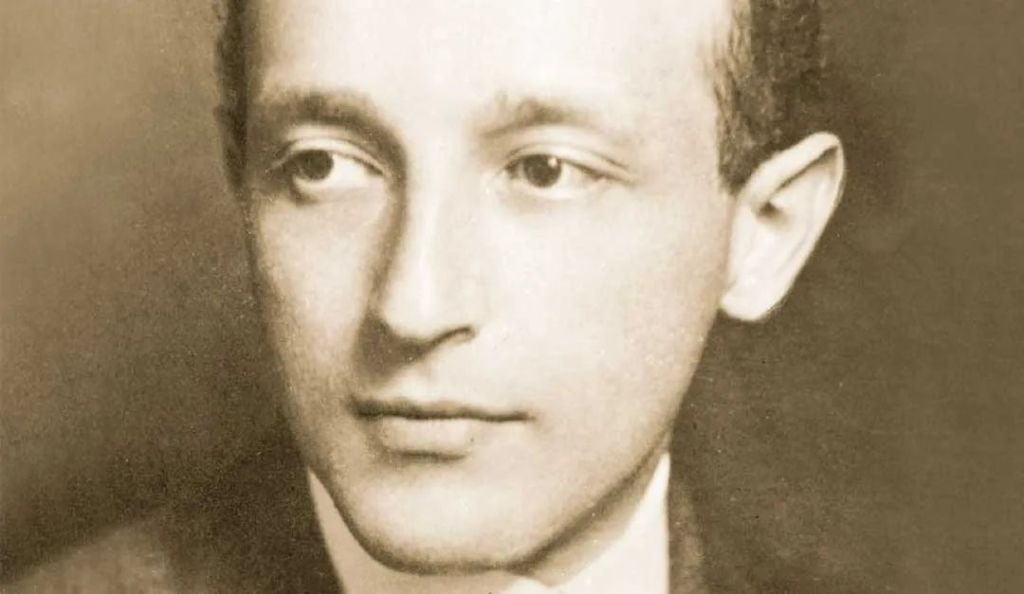
Karl Mannheim’s theory of the sociology of knowledge, which claimed that knowledge is shaped by social positions, made him one of the founding fathers of the branch, but his contribution was also criticized by American academia for relativism and was therefore excluded from the mainstream of sociology. This paper presents an overview of the discussions and criticisms from the period, distinguishing between specific and general forms of relativism and their countervailing responses in Mannheim’s theory. On the first level, specific relativism holds that since the sociology of knowledge believes that all human knowledge is affected by the social position of its creator, the scientific nature of this argument itself is also affected by the position of its proposer. In this regard, Mannheim’s point of view is that the understanding of this influence will eventually lead to a higher level of liberation, so the criticism of special relativism does not constitute a substantial deconstruction of Mannheim’s theory. On the second level, general relativism accuses Mannheim’s theory of threatening the overall legitimacy of social scientific knowledge. Mannheim’s response to this criticism is a new type of epistemology that abandons all forms of transcendental truth. By analyzing the German hermeneutics tradition, the impact of interpretivism, and the social dissolutions and people’s self-consciousness in Weimar Germany that gave rise to the sociology of knowledge, this paper shows the affinity between the society’s anomie status and the vigor of the sociology of knowledge. By comparing the classic sociology of knowledge and its American counterpart, this paper argues that the purpose of Mannheim’s sociology of knowledge is to understand dissolution and self-consciousness at the societal level, rather than the production of middle-range causal explanations.
 Xueqia Zhang